





13 October 2026
Catalyzing Innovations for a World Against Antimicrobial Resistance
By Indrani Kashyap – Article originally published by Jhpiego – view here.
The link between a backyard pig shed, a premature baby, and a £1 million grand prize.
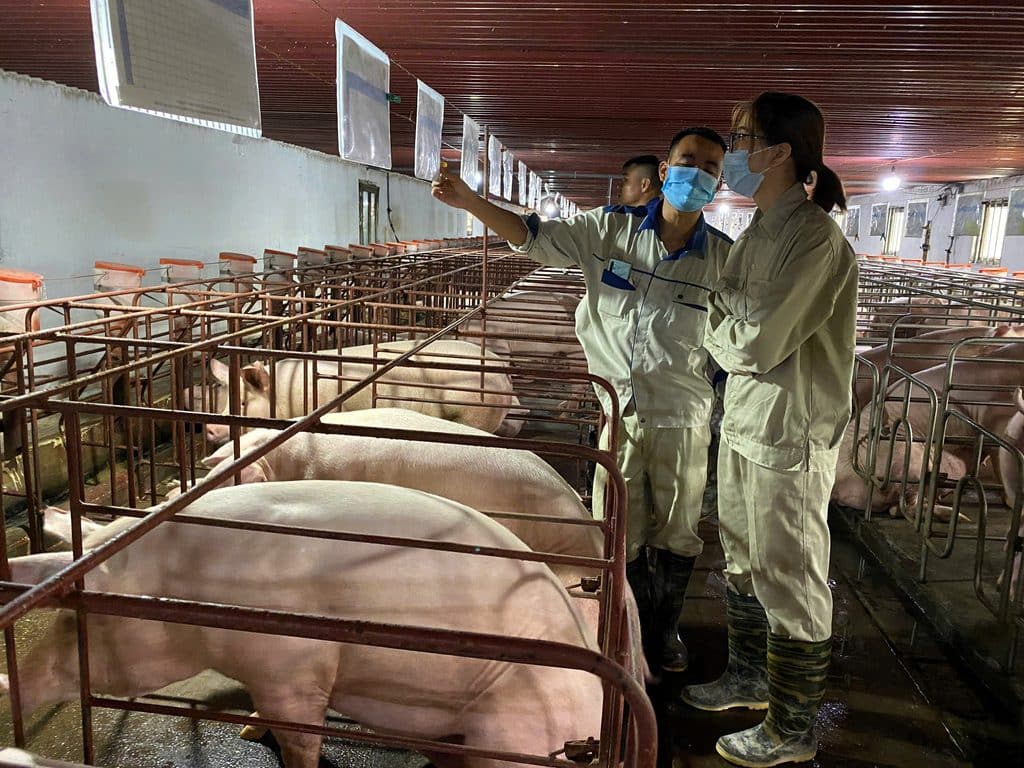
Farm2vet learning about pig production. Photo by Farm2vet.
A pig stops eating outside Hanoi. The farmer has a dozen pigs and no idea what is wrong. The nearest vet is a long drive away and charges a fee that she would rather not pay. So, she does what her neighbors do—she buys antibiotics from the pharmacy down the road and gives a preventive dose to the whole pen, sick and healthy alike.
The trouble is, it works. At least, it works well enough in the short term that nobody senses the longer-term harm. Across Vietnam and several places around the world, millions of decisions like this are made every day, silently feeding the beast of AMR.
AMR is a major global health threat. In 2021, an estimated 4.7 million deaths were associated with AMR globally. Antibiotic misuse and overuse drive the development and spread of drug-resistant pathogens, making infections difficult to treat and increasing the risk of disease spread, severe illness, disability, and death. Drug-resistant infections can spread from animals to people through contact, food, or the environment if animals carry microbes that are resistant to antibiotics.
Eighty-nine percent of Vietnamese farmers work in small family holdings. The small country, with only about 1.2% of the world’s population, ranks eleventh globally for antibiotic consumption. Livestock health in these backyard pens rarely appears in national statistics, making it easy to miss an outbreak until it spreads.
A PERSONAL EXPERIENCE INSPIRED A PROFESSOR TO TAKE ON AMR IN VIETNAM
Professor Helen Nguyen has been mindful of AMR for over 20 years, though her interest did not start with animal farms.
An environmental engineering professor at the University of Illinois for almost two decades, she was born and raised in Vietnam and became interested in infectious disease through a nonacademic route.
It was when her son was born three months premature and Nguyen had to spend three months beside an incubator, watching him “fighting for his life.”
“I literally Googled the (main) cause of infant death,” she says. “And it popped up. It is actually enteric infections. I decided on that day that I was going to work on that.” Enteric infections are gastrointestinal illnesses caused by bacteria, viruses, or parasites that spread through contaminated food or water.
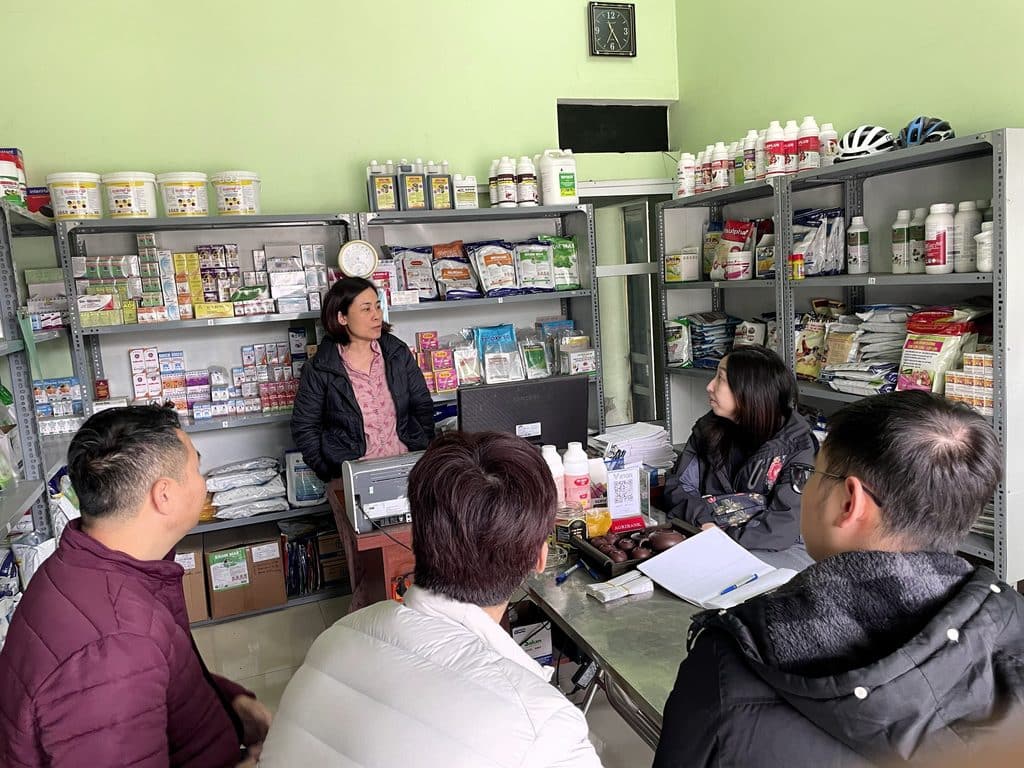
At the start of development, the Farm2vet team met with veterinary drug suppliers to understand the antibiotic supply chain and how farmers and veterinarians make decisions about antibiotic use.
Two decades on, Nguyen can point to progress against viral and bacterial infections but cannot vouch for the same with AMR. “AMR is one of the problems we have made no progress whatsoever for the last few decades,” she says. “That shows me that what we have been doing is not enough, and we need to go to the root cause of the problem.”
That root cause, she concluded after returning to Vietnam post-COVID, is disease moving through livestock, spreading because farmers lack biosecurity knowledge and the country lacks enough veterinarians. Antibiotics, she feels, are the symptoms. Fear, money, and distance are the disease.
GLOBAL AMBITION, LOCAL INSIGHT, COLLECTIVE ACTION
As Nguyen searched for a way to tackle the problem at its roots, The Trinity Challenge was looking for innovative ways to tackle AMR.
The Trinity Challenge is a small British charity with a huge impact. Founded amid COVID-19 under Dame Sally Davies, former Chief Medical Officer for England and Global AMR Advocate, the charity is small but ambitious and has committed over £11 million across 26 countries since 2021.
“The Trinity Challenge is a testimony to Dame Sally Davies’ leadership in the global health space,” says Lars Hartenstein, Director of Healthy Longevity at the McKinsey Health Institute and Partner with McKinsey & Co., which served as one of the founding members and helped build the first challenge. “It’s a particular kind of cross-sectoral ownership as opposed to something owned by a big grant giver,” he says. Associated with this charity from its very start, he says the first sign of The Trinity Challenge’s success was the number of applications it received, remembering how “it was global immediately.” The Challenge received 340 applications from 60 countries.
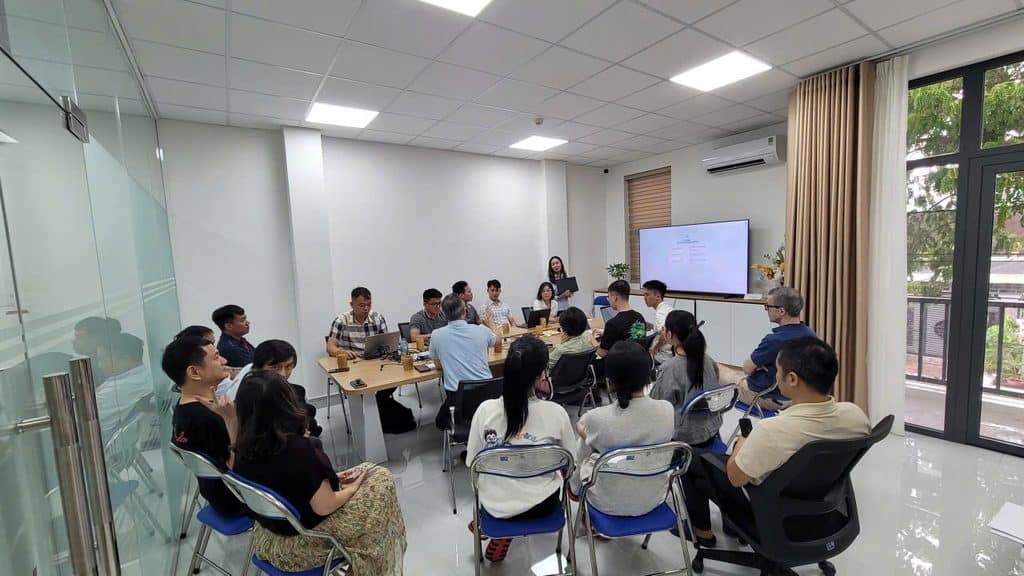
The Farm2vet team observes and works alongside potential users as they try early prototypes, learning from their experiences to inform the next stage of development.
Getting the Challenge question right is critical to its success. “It takes a village,” says Trinity Challenge Chief Operations Officer (COO) Louise Gough, describing the intense process. A hypothesis goes to experts with local as well as global knowledge, who “pull it apart, stress test it. Will this work in low-and middle-income countries?” The Challenge ensures that prize recipients live or work in regions with the greatest needs.
Divleen Jeji, Clinical Specialist at Google for Health and Co-Chair of the Judging Panel, sat in on one of those sessions and calls it “a very participatory process.” Speaking of the 20-member judging panel, with people from as diverse backgrounds as infectious disease clinicians and cloud computing experts, she says, “The solutions the Challenge funds are executed by diverse consortia. Therefore, it is very important to have experts with diverse experience to provide an unbiased opinion on whether someone’s going to go ahead or not.”
FROM 285 APPLICATIONS TO ONE GRAND PRIZE WINNER
When the AMR Challenge launched in 2024, Nguyen assembled colleagues from VinUniversity and the Vietnam University of Agriculture and applied. Their proposal was one of 285 applications from 57 countries.
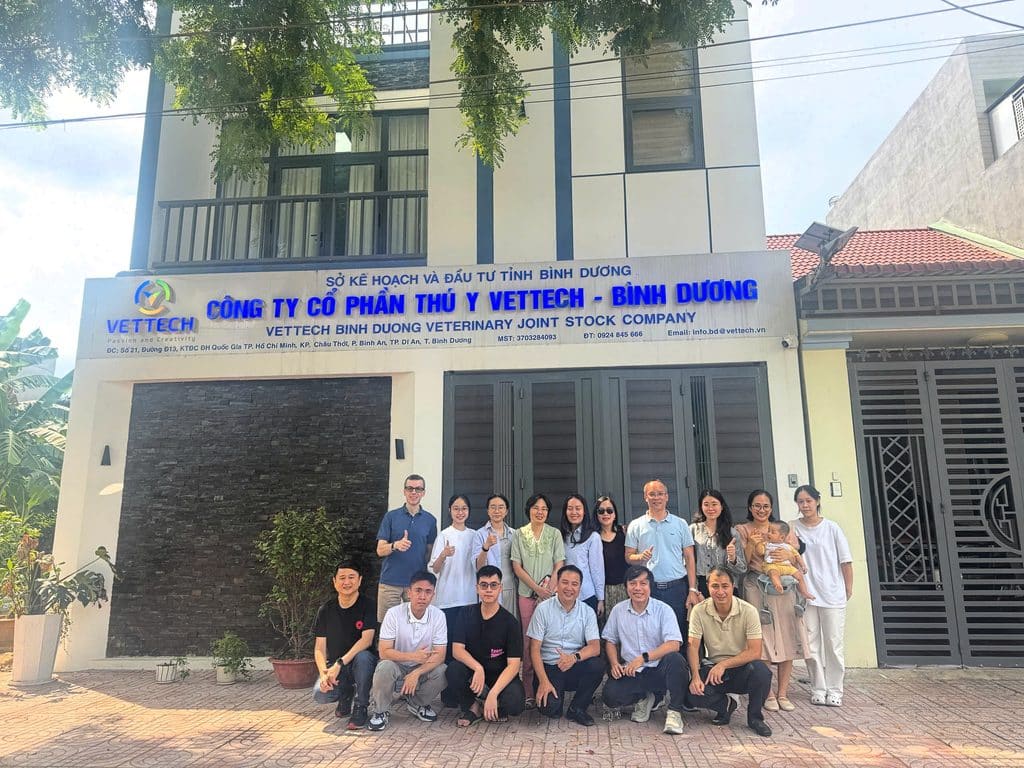
The Farm2vet team met with potential users at a veterinary technology company to observe how they interacted with early prototypes and gather feedback to guide design. Photo by Farm2vet.
Since 2021, MIT Solve, a global engine that moves capital to innovators solving humanity’s greatest challenges, has collaborated with The Trinity Challenge. Noel Shaskan, Program Lead, Health, at MIT Solve, explains the rigorous process the applications go through to find the winner. After an initial screening by MIT Solve, a volunteer review group shortlists the applications; then 20 judges score and rescore and hold live interviews with the shortlisted candidates. “We really try to focus on the meat of the application and not the decoration,” says Shaskan.
Farm2Vet, an initiative led by Professor Helen Nguyen to tackle the critical threat of antibiotic overuse in livestock farming in Vietnam, won the £1 million grand prize in 2024.
WHAT HAPPENS AFTER THE CHECK?
Many other grantors stop at funding. As Shaskan puts it, they usually identify the team, give the funding, and that marks the end of the relationship. That is where, she says, The Trinity Challenge becomes unique.
Jhpiego is a partner with The Trinity Challenge and delivers strategic support, monitors awards, and helps post-award acceleration for the Challenge winners. “It’s not a matter of just cutting a check and walking away,” said Joanne Peter, Jhpiego’s Director of the Innovations Hub. What follows is bespoke support, including three years of check-ins, coaching, a strategic advisory board, an innovative showcase, and access to the rich Trinity Challenge ecosystem.
For Farm2Vet, that support proved as valuable as the funding itself.
“The key contribution of The Trinity Challenge is allowing us to get everyone to work together to solve the problem,” says Nguyen. This included scientists, veterinarians, app developers, and, most importantly, livestock farmers themselves.
AMR IS NOTHING IF NOT LOCAL
Working with the consortium at the hyper-local level transformed the idea. They started by building an AI vet. When they took it to the farmers, they realized the farmers wanted something else.
“They could talk about their difficulties,” Nguyen says, “but they liked to talk a lot more about their success.” They did not want textbook advice, but local successes from people like them. So, the team built one-minute lessons scripted from real farmers’ good practices, in the form of audio, video, cartoons, and even TikTok. Then, while trying to collect data, they found that farmers had no way to record anything, so they built a voice-input notebook to feed data back to the model.
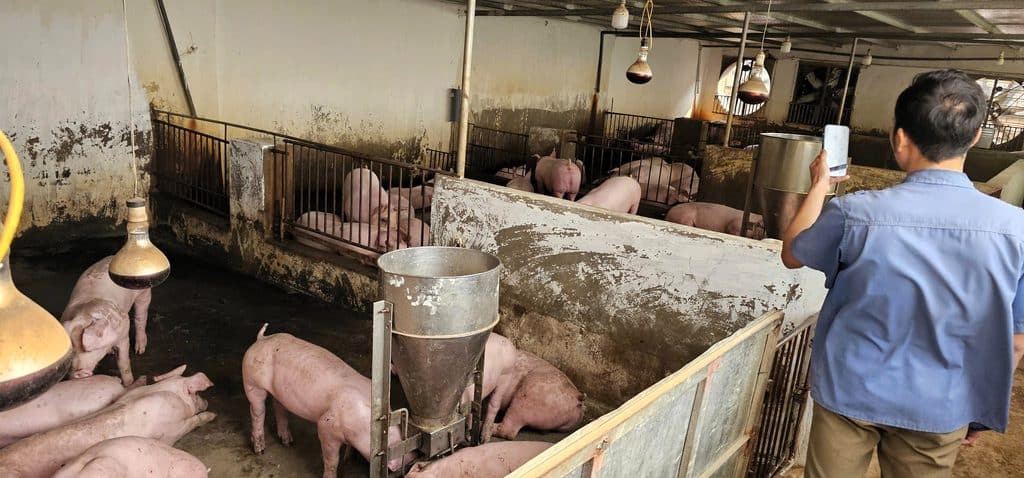
A technician at a pig production company tests Farm2vet’s prototype, helping them understand how the tool might work in a real-world setting. Photo by Farm2vet.
“At the beginning, our idea was an AI-driven virtual assistant,” she says. “But we’ve learned it actually has to be a human-driven, AI-assisted intelligence system. Because if humans don’t drive this thing, it’s not going to work.”
The frontier models are powerful, she notes, but they hold no hyper-local data, and AMR is nothing if not local.
Eighteen months in, with support from Jhpiego, the Farm2Vet team has now formed a social enterprise as a limited liability company to anchor long-term sustainability. After building the self-learning AI platform that translates field data into hyper-local veterinary guidance for livestock keepers, the team has expanded field validation from 30 to around 100 frontline users and earned recognition as a case study in a World Economic Forum report on AMR in Asia.
A CATALYZER FOR SUSTAINABLE CHANGE
Gough sums up the ethos of The Trinity Challenge in what she feels best describes it. “We’re a catalyzer,” she says. “We’re not the ones that deliver on the ground, but we can bring the right people, the funding, the networks, and the opportunity together to help solve pervasive health challenges.”
Ask her what success looks like, and she talks about stories that change lives, rich data where none existed before, and winners securing follow-on funding to sustain and scale their innovations.
Back in Hanoi, Nguyen believes winning The Trinity Challenge gave Farm2Vet the footing it needed to work beyond Hanoi and toward a viable model that can reach farmers across Vietnam.
“With infectious disease, no one is safe until everyone is safe.”
Her ambition is simple: The next time a pig goes off its feed on a small farm outside Hanoi, the farmer will not have to guess. She will simply open Farm2Vet on her phone and get the advice she needs from a vet for free.