





05 June 2026
Kibera’s Youth Led Campaign to Safely Dispose Medicines and Combat Antibiotic Resistance
In one of Nairobi’s most densely populated communities, a young team from Washington State University Global Health-Kenya (WSU GH-K) is running a campaign that connects antibiotic resistance, environmental contamination, and community behaviour change.
On World Environment Day 2026, we are shining a spotlight on one of the winning teams from our Youth Engagement Programme. A group of young public health leaders in Nairobi, are offering a solution to the environmental contamination from improperly discarded medicines.
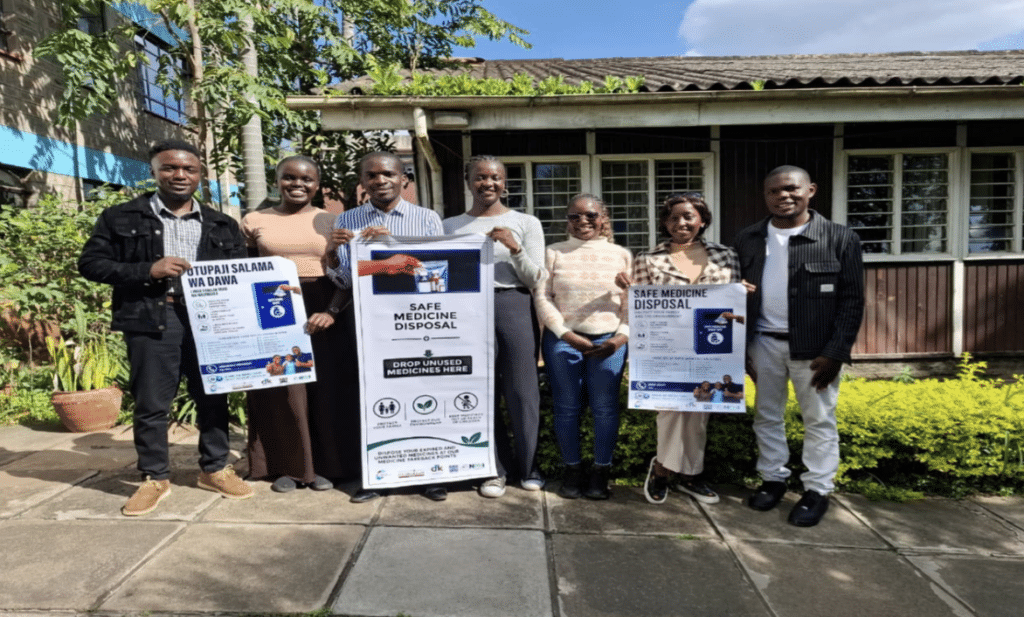
From left – Eric, Sarah, Eliyah, Auxillia, Faith, Ita and David (Dispose Safely, Protect our Planet Team)
The Dispose Safely, Protect Our Planet campaign, led by Eliyah Wekesa and his team at WSU GH-K, is doing something transformational. While many antimicrobial resistance campaigns focus on preventing unnecessary antibiotic use, this initiative turns attention to a quieter but often overlooked question: what happens to the medicines that are already in people’s homes? The team is starting with the individual action of the household as an entry point to a broader AMR conversation, enhancing community safety, and supporting public health. They are driven by a shared purpose, to support the communities least equipped to deal with drug-resistant infections.
The invisible AMR – environment connection
Antibiotics that enter waterways and soil through improper disposal put pressure on bacteria, creating the conditions in which resistant strains emerge and spread. In settings like Kibera, where sanitation infrastructure is limited and informal medicine access is common, this risk is much greater.
Yet community awareness of this connection is low. Most people do not know that throwing medicines in the rubbish – or flushing them away – has consequences beyond their own household. The campaign team identified this awareness gap early, and built an intervention around it.
“I used to throw medicines in the trash. I didn’t know it could make germs stronger. Now I am the one teaching my neighbours to use the cabinet. The change starts with us.”
Ann Akuku, Community Health Promoter, Tabitha Medical Clinic, May 2026
A community-led solution
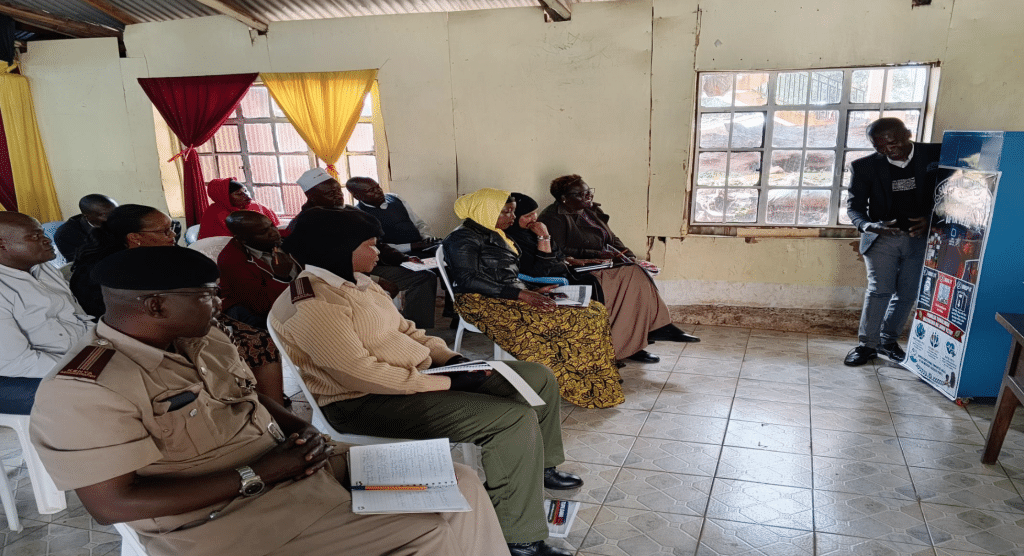
The campaign’s practical mechanism is simple and powerful: secure medicine take-back cabinets, installed in hospital waiting bays across health facilities in Kibera, where community members can safely return unused, unwanted, and expired medicines. The team is tackling all medicines, but with a goal to monitor antibiotics, which when discarded in the environment can contribute to antimicrobial resistance.
During a pilot in November 2024, the team collected 26.5 kg of medicines over just two weeks – approximately 30% of which were antibiotics, including commonly used amoxicillin and metronidazole. The remainder included analgesics, antihistamines, and antimalarials. Medicines were accumulating in homes, and communities needed an accessible, trusted route to dispose of them safely.
For the 2026 scale-up, supported by the Trinity Challenge, 15 lockable cabinets have been built and are being installed. A licensed pharmaceutical waste management company, Infection Prevention and Control Associate (IPCA), has been identified to handle final incineration. The campaign also involves baseline and endline surveys across 200 households, focus group discussions, and two public rallies.
“This campaign is timely. If we had something like this in the 1990s, we would have avoided many problems. I commend the youth for bringing this solution to Kibera.”
Dr. Asma Awadh, Sub-County Medical Officer of Health, Kibera – Campaign Launch, May 4th 2026
Youth leadership that goes all the way to the top
What sets this campaign apart is not just its practical design, but the level of institutional support a youth-led team has earned from the ground up.
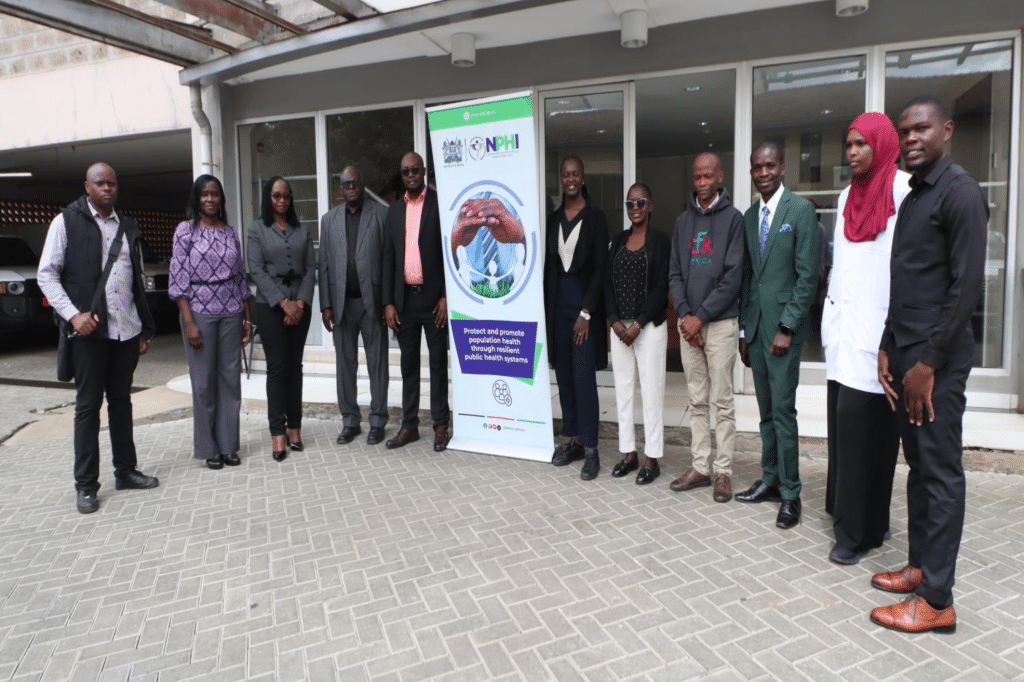
In March 2026, the campaign received formal endorsement at a high-level stakeholders’ meeting at the Kenya National Public Health Institute boardroom – attended by senior figures from key health, environment and veterinary bodies. In April, a letter from the Nairobi City County Government’s Chief Officer for Medical Services authorised the campaign. The Deputy County Commissioner of Kibera Sub-County additionally granted formal permission for the team to engage village elders and community leaders across the area.
Over 30 community leaders gathered at Kibera DC Grounds – including the Assistant County Commissioner, Chiefs from four wards, Village Elders, Nyumba Kumi Officials, and Youth Representatives – and pledged to mobilise their communities. What happened in that room said something important about how this campaign had been built, community is key.
“I am standing here as a government official, and I must admit – I have a drawer full of half-used tablets. If I am doing it, so are thousands of my people. This campaign is for all of us.”
Assistant County Commissioner, Kibera Division – Local Leadership Meeting, April 22nd 2026
That admission – from a senior government official, in front of community leaders, at a meeting that was supposed to be a formal briefing – transformed the room. Within minutes, several chiefs and village elders had volunteered to be among the first to return medicines from their own homes to the new cabinets. A government meeting became a personal commitment.
Speaking the language that works
The campaign has also been shaped by engagement in community meetings. When the team presented their first draft outreach materials, a youth leader from Kenyatta Ward offered a pointed challenge:
“If you come to us with English posters, my friends will use them to wrap chips. You need to speak in Sheng. Say ‘Usitupe Dawa Ovyo’ – that will make them listen.”
The team listened. Social Media Lead David Okong’o worked with youth co-creators to develop Sheng-language materials on the spot – a small moment that reflects something larger about how this campaign operates: it is responsive, community-anchored, and built with local expertise rather than imposed upon it.
Usitupe Dawa Ovyo – Don’t throw away medicines carelessly. A campaign message, co-created with Kibera’s youth.
Why this matters for AMR – and for the planet
The environmental dimensions of AMR are often absent from the public health conversation. Most AMR awareness campaigning focuses, rightly, on use and misuse of antibiotics and prescribing behaviour. But the Dispose Safely, Protect Our Planet campaign is an example of approaching AMR education in a new way, built by young people who understand their community from the inside.
Dr. Sylvia Omulo, strategic mentor to the campaign, described it in exactly these terms:
“Youth engagement is critical in strengthening sustainable community awareness and stewardship. This campaign demonstrates how local innovation can contribute to national public health priorities.”
Dr. Sylvia Omulo, AMR Research Lead and Assistant Professor at Washington State University
What comes next
The campaign is at its midpoint. The 15 cabinets are being installed. Baseline surveys across 200 households are underway. Community Health Promoters are being trained. Two public rallies are planned including community-level behaviour change messaging developed in collaboration with local youth.
The team is in active discussion with Nairobi County Government about post-campaign sustainability and co-funding – a conversation that would not be happening had this started anywhere other than the community itself.
The Trinity Challenge’s Youth Competition exists precisely to give young leaders like Eliyah Wekesa and his team the platform, the resources, and the institutional backing to take an idea from pilot to scale. On World Environment Day 2026, this campaign is a reminder of what that youth empowerment looks like in practice.
For more information about the impact our young leaders are making in the world, visit https://thetrinitychallenge.org/youth-impact/