





22 March 2026
From Local Champions to Global AMR Leaders
Two Youth Competition Winners. Two Continents. One Mission.
When The Trinity Challenge launched its Youth Funding Competition, we put our trust in a generation of young people who believed that tackling antimicrobial resistance (AMR) had to begin at the grassroots – in our schools, in our communities, and in our homes. Two of those winners, Damilola Adesuyi from Nigeria and Dr Sweety Suman Jha from India, represent a snapshot of that generation: separated by thousands of miles, shaped by very different local realities, yet united by the belief that young people, given the right tools and trust, can accelerate the global AMR response.
It started with a campaign on WASH – water, sanitation, and hygiene – understanding it not as a separate challenge from AMR but as inseparable from it. Both youth winners channelled their Trinity Challenge grants into community-level education and behaviour change. And both have since risen from local youth champions to respected figures on the global AMR stage, speaking at the AMR 2026 Summit in Sydney, contributing to international policy processes, and shaping the next generation of AMR educators.
This article brings their stories together – drawing out what they share, where their paths diverge, and what their journeys reveal about the power of investing in youth leadership across the Global South.
Nigeria: WASH off AMR
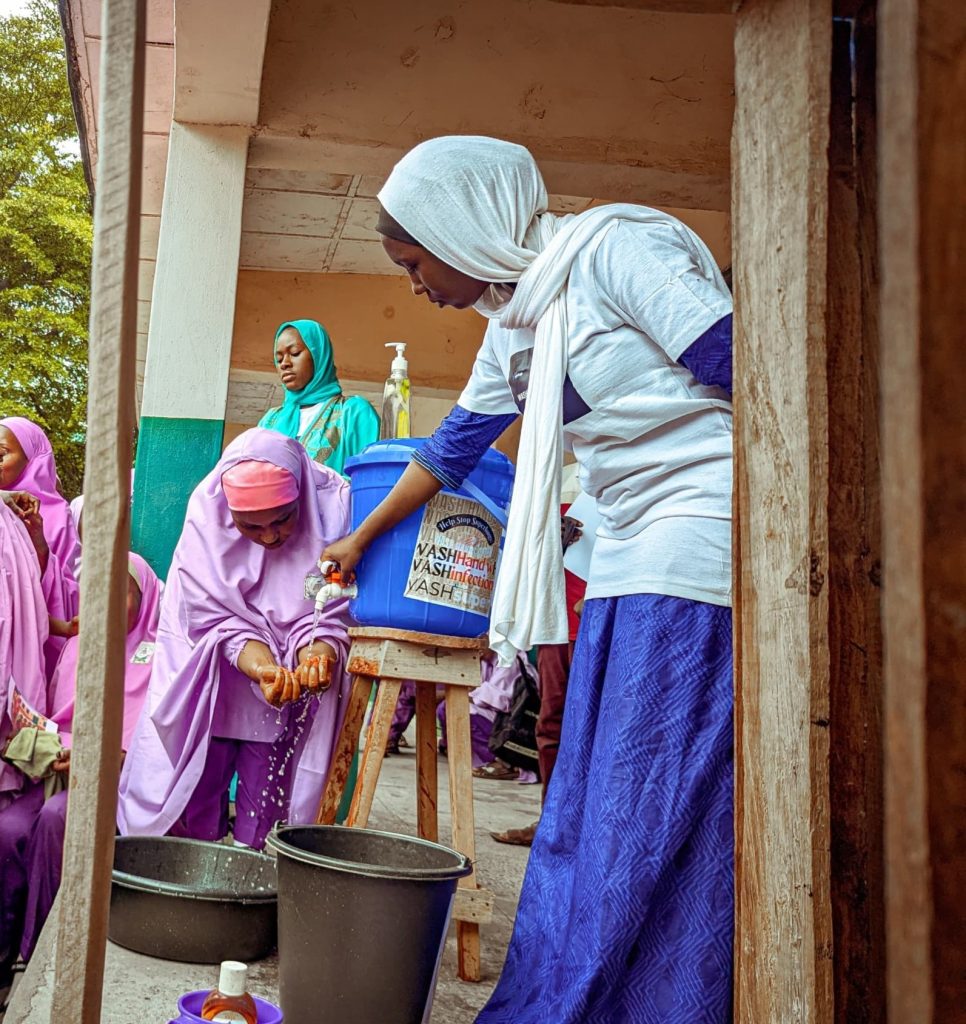
Image: WASH Off AMR school event
For Damilola Adesuyi, the Trinity Challenge Youth Funding Award was the moment a long-held vision became reality. A passionate advocate for AMR education and behaviour change, Damilola had been concerned about how antimicrobial resistance was accelerated by the way people use and dispose of antibiotics, and by gaps in WASH and vaccination practices.
Together with his team, the WASH off AMR campaign led by Damilola trained 38 young people, who in turn trained 163 peer volunteers. Those volunteers delivered clear, accessible AMR messages to over 30,000 secondary school students across Nigeria. The model was deliberately peer-led: young people speaking to young people, using language that resonated.
India: Bridging traditions in tribal schools
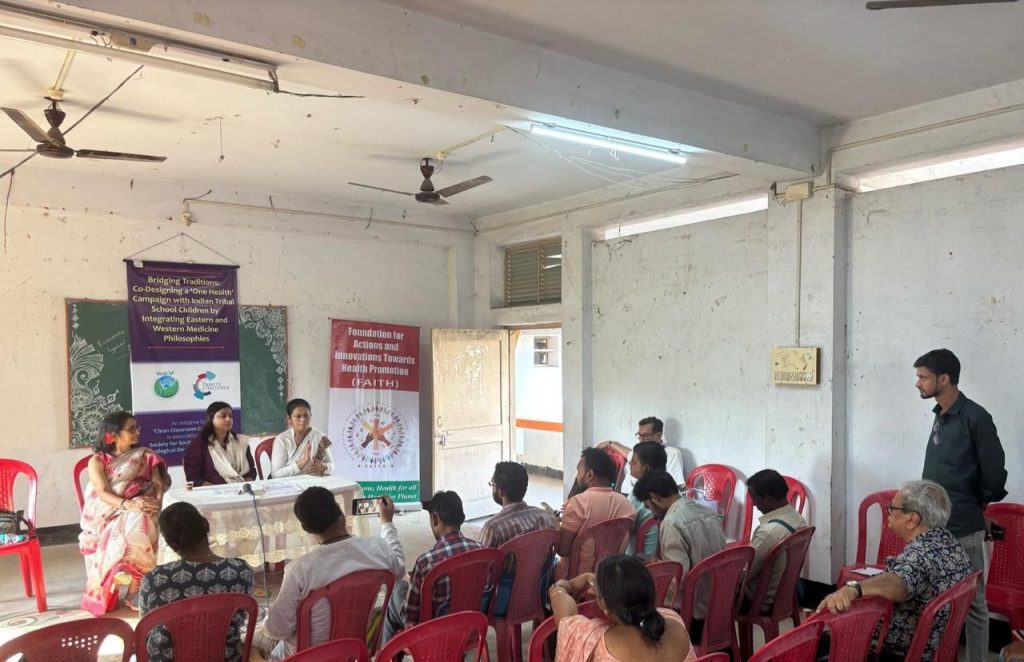
Image: Bridging Traditions school event
In India, Dr Sweety Suman Jha came to the Trinity Challenge Award from a different entry point but with a shared instinct. As a Research Scientist at the Foundation for Actions and Innovations Towards Health Promotion (FAITH), Sweety had been working to translate One Health research into community action, particularly in underserved and tribal areas where both WASH deficits and informal healthcare practices created acute AMR risks.
Her Trinity Challenge project established One Health Clubs in schools in tribal communities – spaces where students, teachers, parents, and community leaders could come together around participatory learning. The approach went beyond AMR messaging: it built relational infrastructure, connecting formal education with the lived realities of communities where healthcare-seeking behaviour is shaped by culture and by access to contextual information.
“The Trinity Challenge Award was not just funding – it was a turning point. It gave us the confidence that what we were doing mattered beyond our own communities.” – Dr Sweety Suman Jha
What makes Damilola and Sweety’s journeys so interesting is the ways in which their contexts shaped their strategies – and the ways in which, despite those differences, their insights overlap.
Nigeria is a country of over 200 million people, with a fragmented health system and significant variation in AMR awareness across its 36 states. Damilola’s work has had to deal with that complexity – seeking not just to educate communities, but to connect local action to national policy processes. Since his Trinity Challenge project, he has engaged with Nigeria’s National Action Plan on AMR, contributed to the preparation for the 5th High-Level Ministerial Conference, and helped found the Nigerian Youth AMR Community of Practice, a subcommittee of the One Health National AMR/AMU Community of Practice, supported by the Nigeria Centre for Disease Control and Prevention.
His work has increasingly focused on institutionalisation – ensuring that youth-led AMR action is not dependent on the energy of one individual or project cycle, but embedded in structures that outlast any single initiative. The transition of the WASH off AMR campaign from an informal youth group into a formal strategic coalition shows this thinking in practice.
Sweety’s context demanded a different emphasis. Working in tribal and underserved communities in India, the challenge was reaching populations where health literacy is low, formal healthcare access is limited, and the dominant health narrative is shaped by informal providers. Her approach has been to work across the entire ecosystem: training informal healthcare providers in One Health principles, engaging media to strengthen AMR awareness, and building what she describes as an ‘alliance of FAITH with MEDIA’ – an innovative model for community-informed health communication.
Sweety has also placed particular emphasis on gender equity in AMR – recognising that women and girls in tribal communities often bear the greatest burden of poor WASH practices and have the least access to accurate health information, yet also serve as primary caregivers whose behaviour has disproportionate community impact. Her ORCHID initiative (One Health for Responsive Communities through Health Promotion, Innovation, and Digitalisation) centres this explicitly.
What unites Damilola and Sweety most powerfully is the arc of their journeys – the way local credibility has translated into global influence, and the way each has used that influence to keep pulling the global conversation back to communities.
Damilola’s work was recognised with the Antibiotic Guardian Award, and he has since contributed to the AMR Education Consensus developed by the Fleming Initiative, the result of a global conversation that asked what children and adolescents need to know to act as agents of change. He currently serves on the AMR Collaborative Network Steering Committee, as well as on the Quadripartite Working Group on Youth Engagement for AMR.
Sweety was selected as a Female AMR Trailblazer 2025 by the Fleming Initiative and CSIRO – a recognition that speaks both to her technical contribution and to the leadership role she has assumed in advancing gender-responsive AMR action. She also contributed as an expert stakeholder to the global consensus document on tackling Antimicrobial Resistance through education, facilitated by the Fleming Initiative. She also currently serves on the AMR Education Collaborative.
Perhaps the most vivid symbol of both journeys is their convergence at the AMR 2026 Summit in Sydney – a significant global gathering on antimicrobial resistance.
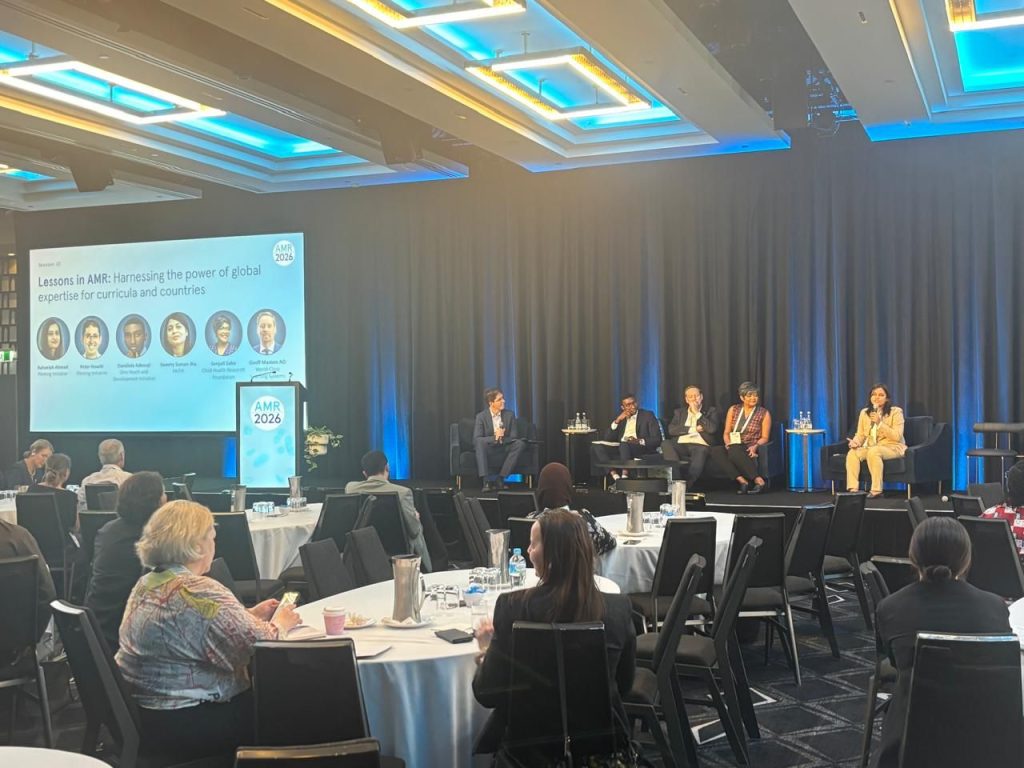
Image: Damilola and Sweety on a panel at the AMR Summit 2026
Damilola served as a programme committee member and moderated a session on meaningful youth engagement, showcasing youth-led initiatives from across the world. He also participated in a panel discussion on AMR education and its role in sustaining the global AMR response.
Sweety spoke as a panel speaker in the session ‘Lessons in AMR: Harnessing the power of global expertise for curricula and countries,’ sharing insights on advancing AMR education across diverse contexts – bringing the voice of India’s tribal communities into a room of global policymakers and researchers.
The fact that both were at the table – not as observers, but as recognised contributors – is a testament to what the Trinity Challenge investment made possible.
“Progress against AMR will depend not only on scientific breakthroughs or policy commitments, but also on how well we empower communities and the next generation to be antimicrobial stewards.”
— Damilola Adesuyi
Across their different contexts and approaches, Damilola and Sweety’s journeys surface several lessons that matter for the global AMR movement.
Education is infrastructure – both champions demonstrated that AMR education done consistently, and embedded in existing community structures like schools – is not a soft complement to the ‘real’ work of surveillance, drug development, or regulation. It is foundational infrastructure for a sustained AMR response. Without communities that understand why they should change behaviour, and young people who can carry those messages forward, every other intervention lacks impact.
Youth leadership requires genuine investment, not tokenism – both Damilola and Sweety are clear that the Trinity Challenge award was not just funding – it was a signal of institutional trust. That trust gave them the credibility to convene others, attract partners, and build programmes with longevity. The global AMR community should take note: youth engagement that consists of inviting young people to conferences to share their stories is not the same as investing in young people’s capacity to lead.
Local knowledge is a global asset – Sweety’s insights on gender equity and tribal communities, and Damilola’s understanding of peer-led behaviour change in Nigeria, are not just locally relevant – they are precisely the kind of contextual intelligence that global AMR policy often lacks. Both champions have found ways to bring that knowledge into international processes, and the global AMR response is richer for it.
Sustainability must be built in from the start – a recurring theme in both journeys is the deliberate effort to build structures that outlast any single project. From Damilola’s transition of the WASH off AMR campaign into a formal coalition to Sweety’s development of teacher training modules and her work piloting the global consensus document in schools, both champions have kept the question of long-term sustainability at the centre of their thinking.
Damilola continues to expand Nigeria’s AMR education footprint, now co-leading workshops and supporting systematic reviews as part of a multi-country research initiative funded by the Wellcome Trust and commissioned by the International Centre for Antimicrobial Resistance Solutions. His focus remains on building the evidence base for sustainable AMR interventions in low- and middle-income countries – while keeping youth leadership at the heart of the effort.
Sweety is advancing ORCHID into new areas: developing an AMR teacher training module to strengthen educators’ capacity, piloting the global consensus document in schools, and continuing to build the case that gender equity and One Health are not separate agendas but connected at the core.
Their journeys from local champions to global AMR leaders are not just personal success stories. They are evidence of what becomes possible when the right investment meets the right people at the right moment.
To see more from our youth competition winners and their impact, watch our impact video here.