






09 January 2026
Policy in Practice: How Youth Are Advancing Biosecurity and WASH to Tackle AMR in India
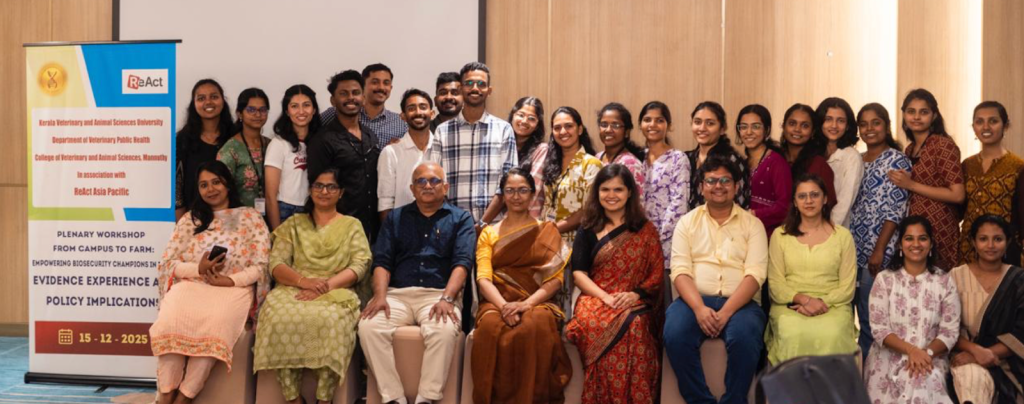
Image: ‘From Campus to Farm’ Student Event
Antimicrobial resistance (AMR) is often described as a slow-moving pandemic – one driven not only by medicines, but by everyday practices around hygiene, sanitation, food preparation, and infection prevention. India’s National Action Plan on Antimicrobial Resistance (NAP-AMR) 2.0 makes this clear, placing biosecurity and Water, Sanitation and Hygiene (WASH) at the heart of efforts to reduce infections and curb the misuse of antimicrobials.
Across India, youth-led teams supported by funding from The Trinity Challenge Youth Competition are turning these national priorities into action on farms, in veterinary schools, and in classrooms, demonstrating how locally grounded innovation can strengthen AMR prevention from the ground up.
NAP-AMR 2.0 explicitly frames infection prevention as one of the most effective ways to reduce antimicrobial use. It calls for improved biosecurity and containment measures in livestock and aquaculture, alongside community-level infection prevention through safely managed WASH services and behaviour change. Schools are recognised as critical settings for early intervention, with the plan committing to sanitation and hygiene promotion among school and college students as part of AMR prevention.
These priorities reflect a One Health approach- recognising that human health, animal health, and environmental conditions are deeply interconnected and that AMR cannot be addressed through clinical interventions alone.
Two Trinity Challenge youth-led projects focused on farm-level biosecurity, directly aligning with the Action Plan’s emphasis on infection prevention in animal husbandry.
In Resisting AMR, One Farm at a Time, young researchers and veterinary students worked alongside dairy farmers to co-design low-cost, practical biosecurity measures suited to resource-constrained settings. Through farmer interviews, live demonstrations, and the distribution of simple biosecurity kits, the team strengthened understanding of hygiene, waste management, and responsible antibiotic use while also surfacing the economic and trust barriers that shape on-farm decision-making. In addition to hands-on work at the farm level in Ludhiana, the campaign has expanded nationwide to raise awareness about antimicrobial resistance (AMR).
“After conducting workshops with both dairy farmers and veterinary students, our team gained an important new dimension in understanding AMR within animal health. While our primary focus has traditionally been on human health and disease, these field engagements highlighted how animal health, farm practices, and food-chain contamination contribute significantly to antimicrobial resistance. These experiences reinforced that AMR is not just a human-centric problem- it is a holistic, interconnected ecosystem challenge. Recognizing this One Health perspective has been essential in shaping our campaign strategy and strengthening our efforts to address AMR across all sectors.” said Shweta Pandey, Team Lead, Doctorate candidate, Bioinformatics Center, CSIR-Institute of Microbial Technology
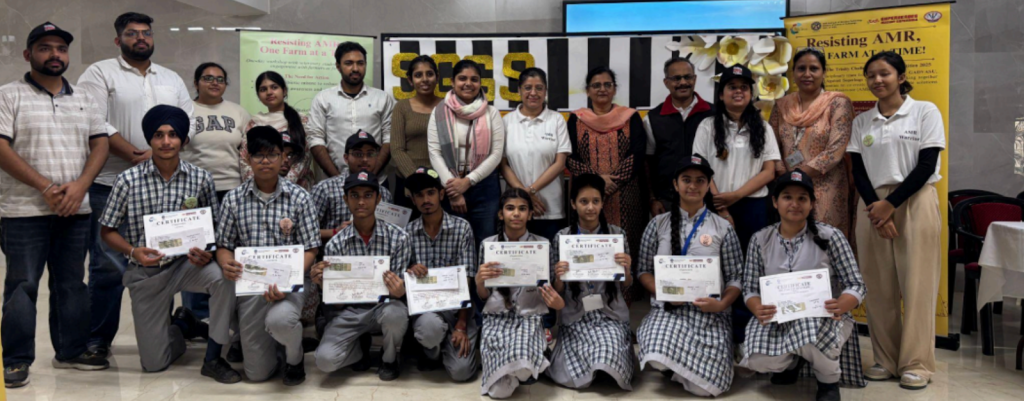
Image: ‘Resisting AMR, One Farm at a Time’ event with students
Similarly, From Campus to Farms: Empowering Biosecurity Champions in India trained veterinary students as frontline AMR advocates. Students moved beyond classrooms into poultry farms, identifying biosecurity gaps, engaging farmers through dialogue, and supporting the adoption of feasible practices such as footwear hygiene, visitor control, and shed sanitation. The project demonstrated that prevention focused, student-led engagement can shift both knowledge and attitudes, even where structural challenges remain.
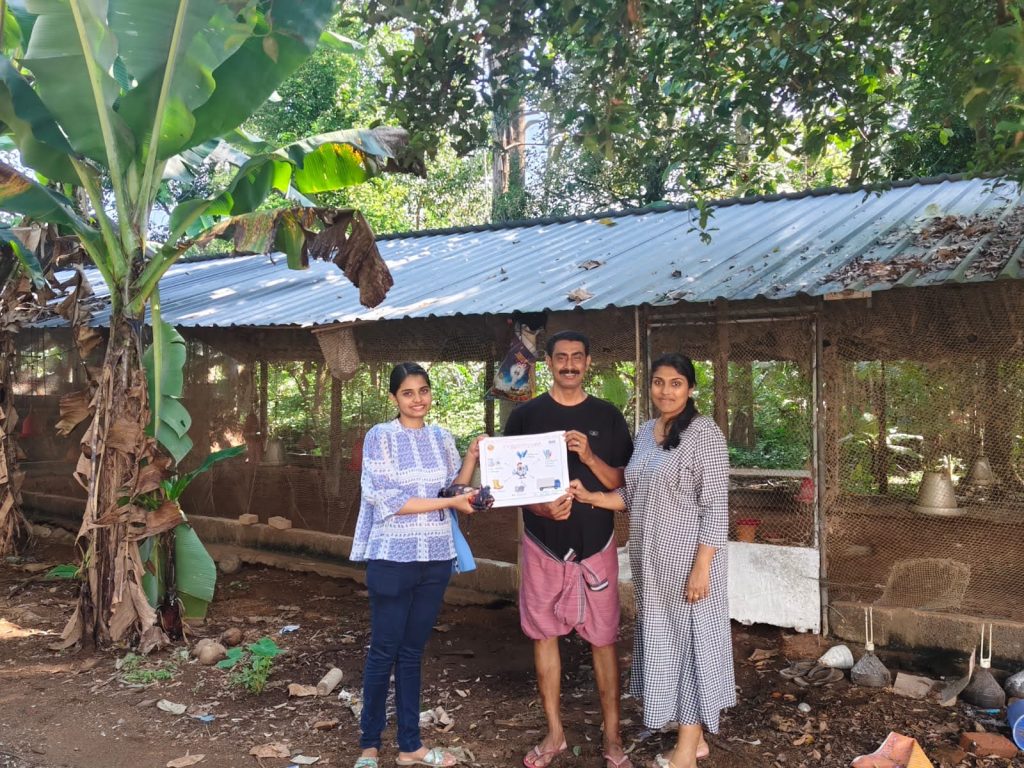
Image: Student farm visits with ‘From Campus to Farm‘
Together, these projects bring the NAP-AMR vision of biosecurity to life: not as an abstract standard, but as a set of context-specific, achievable actions grounded in real farm realities.
NAP-AMR 2.0 recognises that behaviour change must start early, highlighting schools as vital spaces for WASH promotion and AMR awareness. This principle sits at the core of Bridging Traditions: Co-Designing a One Health Campaign with Indian Tribal School Children.
Working across eight tribal schools in Darjeeling and Purulia, the Bridging Traditions team engaged students, teachers, parents, and local leaders to strengthen WASH practices and AMR understanding through participatory learning. Activities ranged from role-plays and quizzes to community discussions and the creation of school-based “One Health Clubs.” The intervention led to measurable improvements in awareness and practice and, in one residential school, inspired the creation of an antibiotic-free poultry farm managed according to WASH and One Health principles.
This project illustrates how WASH in schools is not only about infrastructure, but about ownership, cultural relevance, and empowering young people to act as health champions within their communities, precisely the behaviour change pathway envisioned in India’s AMR Action Plan.
“Among tribal school children, AMR and WASH became more than abstract concepts; through co-design, they evolved into shared responsibilities within a ‘One Health’ vision that respects local knowledge and lived realities.” said Dr Sweety Suman Jha (Team Lead).
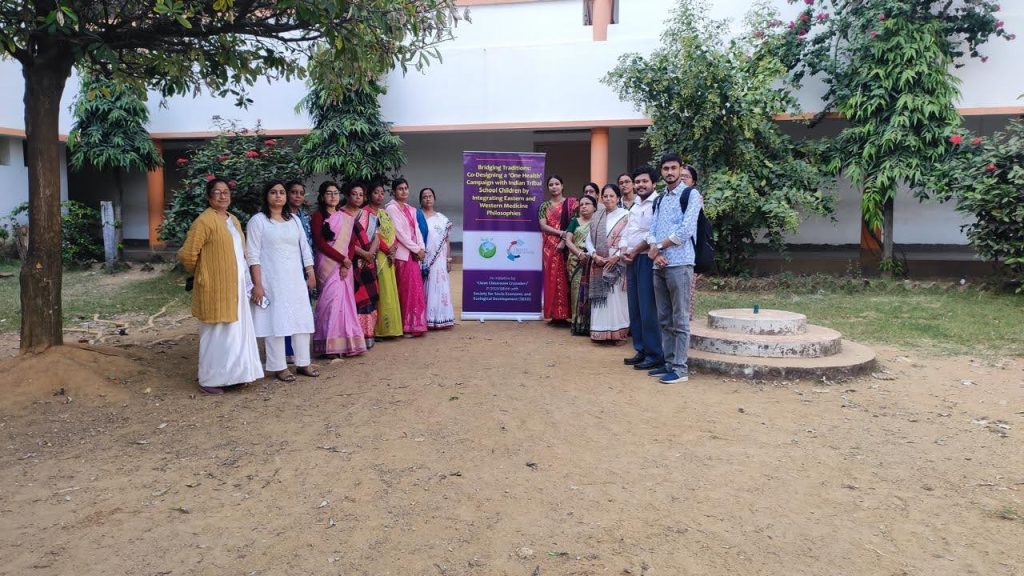
Image: The ‘Bridging Traditions’ team with Teachers and school authorities in Purulia as part of the WASH in Schools AMR campaign
The impact of these youth-led efforts extends beyond local settings. Dr Sweety Suman Jha, a core member of the Bridging Traditions team, has been recognised as a 2025 AMR Trailblazer by the Fleming Initiative, an honour awarded to leaders advancing innovative, cross-sectoral solutions to AMR. Her recognition underscores the global relevance of youth driven, community embedded approaches to tackling Antimicrobial Resistance.
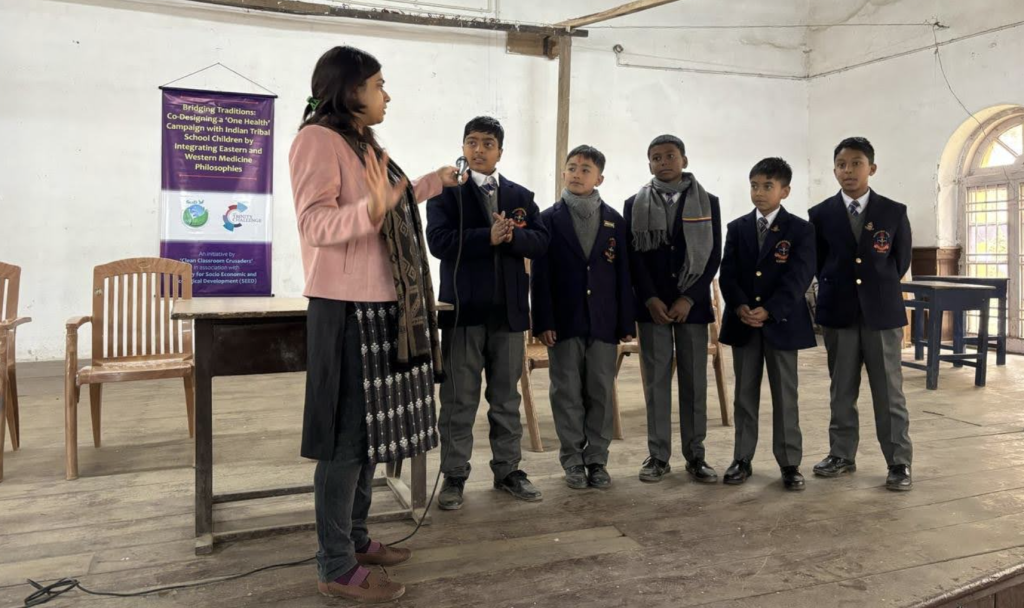
Image: Dr Sweety Suman Jha engaging young minds in Darjeeling during an interactive session
Taken together, these three Trinity Challenge Youth Competition projects show how policy commitments on biosecurity and WASH can be translated into practical, people-centred action. They reinforce a central lesson of India’s AMR Action Plan: that preventing infection on farms, in schools, and in everyday life is one of the most powerful tools we have to protect antibiotics for the future.
By investing in youth leadership, co-design, and locally grounded solutions, The Trinity Challenge is helping ensure that AMR strategies do not remain on paper, but are put into practice and strengthened where they matter most.
If you have questions for any of the teams then please email [email protected]